
CORRECTIVE P M U · VALENCIA, CA
Saline Tattoo Removal in Santa Clarita — A Gentle Way to Lighten Unwanted PMU
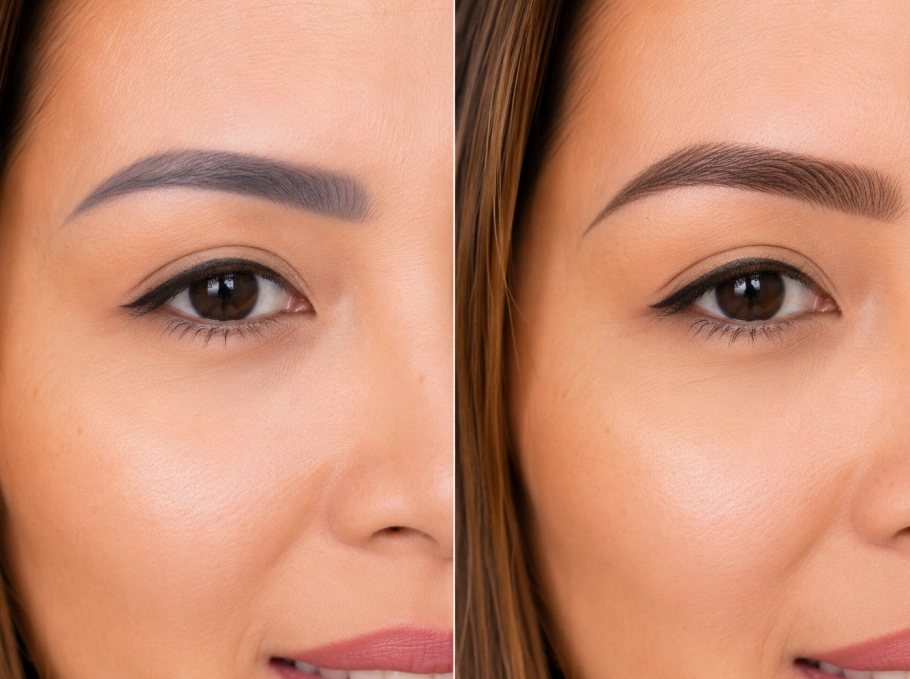
If your permanent makeup is too dark, too saturated, or simply not what you wanted, saline removal is often the safest way to lighten it — and sometimes the smartest first step before any correction. It works gradually and gently, without the harsh chemicals or heat some other methods rely on.
I’m Jeanny Evans, and I use saline removal at JNX Beauty Lounge for exactly these situations: brows that came out heavy, eyeliner that migrated, or old pigment that’s simply too built up to correct on top of. Here’s how it works, when it’s the right call, and what to realistically expect.

Registered Body Art Practitioner
LA County Dept. of Public Health
10+ Years of Experience
Thousands of Natural-Looking Results
Bloodborne Pathogens Certified
Cal/OSHA Safe Body Art Standards
Bilingual Care
English & Vietnamese · Permitted, Sterile Studio


How saline removal actually works
Saline removal uses a simple principle: osmosis. A specialized saline solution is worked into the same layer of skin where the pigment sits. Because salt draws fluid toward higher concentration, it lifts the trapped pigment up and out as the skin heals and scabs over. Each session pulls a little more pigment to the surface.
It’s the same technique used to open the skin as the original tattoo — just used in reverse, to bring color out instead of putting it in. That’s why it’s considered one of the gentler options: no lasers, no acid, and pigment colors that lasers can struggle with (like light or warm tones) respond to saline just the same.
Saline vs. laser removal — which is better for permanent makeup?
Both have their place, but for cosmetic tattoos specifically, saline has real advantages. Lasers target dark pigment by shattering it — which works well on traditional tattoos, but on PMU it can sometimes turn certain pigments a strange color (a real risk with the iron-oxide pigments common in older brow work). Saline doesn’t care about the color; it lifts pigment regardless of shade.


| Saline removal | Laser removal | |
|---|---|---|
| Best for | Brows, eyeliner, lips (PMU) | Large / old body tattoos |
| How it works | Osmosis lifts pigment out | Heat shatters pigment |
| Pigment color | Lifts any color, incl. light/warm | Can struggle with / shift light tones |
| Chemicals / heat | No harsh chemicals, no heat | Uses heat |
| Typical use here | Recommended for most PMU | Referred out when it's the better tool |
For most brow, eyeliner, and lip cases, I recommend saline. For very large or very old body tattoos, laser is usually the better tool — different job.
When removal comes before correction
A lot of people come in wanting their brows fixed, and the honest answer is that we need to lighten what’s there first. If old pigment is very dark or heavily saturated, trying to correct or recolor on top of it usually looks muddy. Removing some of that old color creates a clean enough base to rebuild on — and the final result is far better for the patience.
If your main issue is discoloration rather than saturation, color correction may be all you need — removal isn’t always required.
What to expect — sessions and healing
Saline removal is a process, not a one-and-done. Most cases take multiple sessions spaced 6–8 weeks apart, because the skin needs to fully heal between each one. How many depends on how much pigment is there, how deep it was placed, and how your skin responds.
After a session, the area scabs — and it’s essential to let those scabs fall off naturally, since picking them can affect the skin and the result. You’ll get clear aftercare instructions. Fading looks gradual across sessions, and I’ll tell you honestly how many I think you’ll need after seeing the work.
Ready to reset? Send me a photo.
Whether you want work fully removed or just lightened enough to correct, the first step is a quick look. Send a clear, well-lit photo and I’ll tell you honestly what’s realistic and roughly how many sessions it would take.
Here in Valencia, serving the Santa Clarita Valley. English & Vietnamese welcome.

Saline Tattoo Questions Answered
Does saline removal completely erase permanent makeup?
It can significantly lighten or fully remove pigment, but results depend on how much ink is there, how deep it was placed, and your skin. Some cases clear completely; others lighten enough to correct or rework. After seeing your work, I’ll give you a realistic expectation rather than a promise — gradual, honest progress is the goal.
Is saline removal painful?
Most people find it comparable to getting the original permanent makeup — manageable, not severe. A numbing agent is used to keep you comfortable during the session. There’s some tenderness afterward as the area heals and scabs, similar to any small skin treatment.
How many saline removal sessions will I need?
Most cases need several sessions spaced 6–8 weeks apart to allow full healing between visits. Lightly saturated work may clear in fewer; dense or deeply placed pigment takes more. You’ll get a realistic estimate after an assessment — rushing the spacing doesn’t work and can affect your skin.
Is saline safer than laser for eyebrow tattoos?
For cosmetic tattoos, many artists prefer saline because it lifts pigment regardless of color, while lasers can sometimes cause certain PMU pigments to shift shade unexpectedly. Saline also avoids heat and harsh chemicals. That said, the right method depends on your specific situation, which is what the assessment determines.