
CORRECTIVE P M U · VALENCIA, CA
Permanent Eyeliner Correction — Fixing Migrated, Heavy, or Uneven Liner
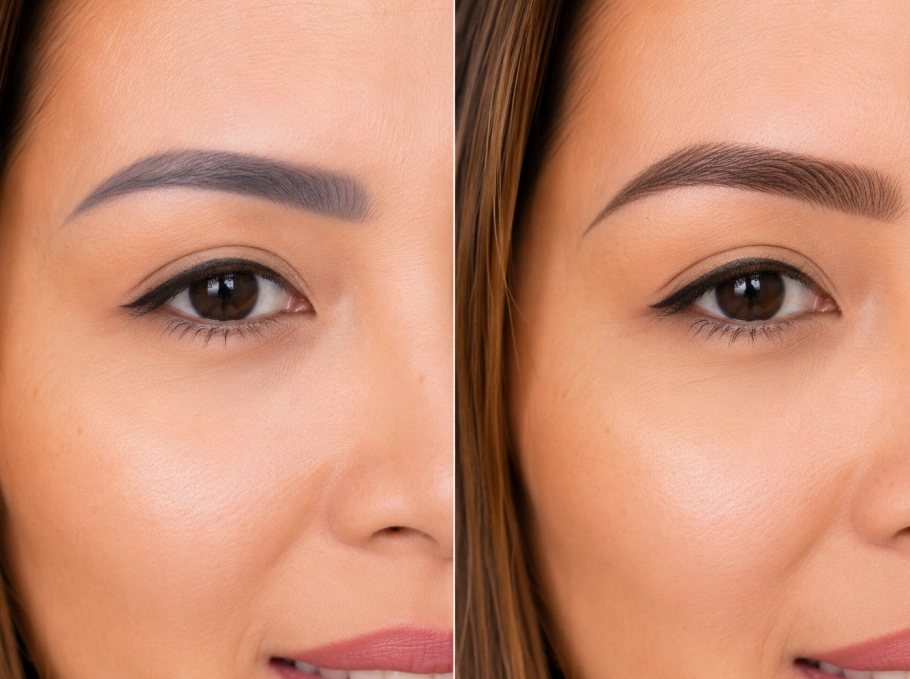
Permanent eyeliner should make your eyes look defined and awake — not smudged, uneven, or wider than you ever wanted. If your liner has spread beyond the lash line, healed into a bluish shadow, or came out heavier on one side, you’re not stuck with it.
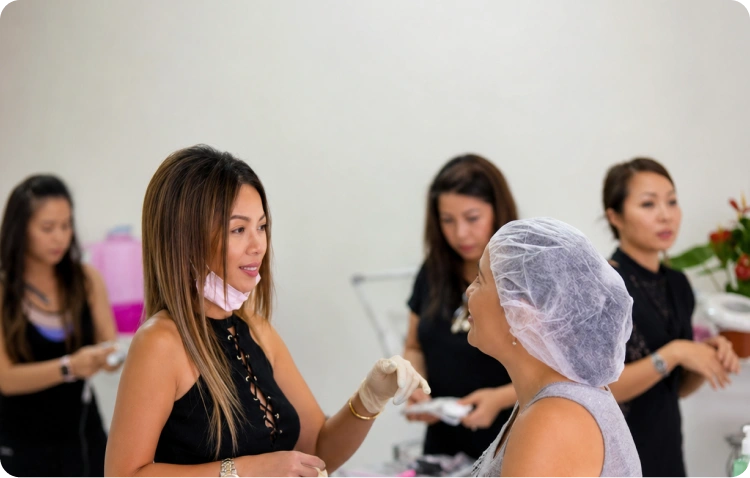
I’m Jeanny Evans, and eyeliner correction takes a careful hand because the eye area is the most delicate place we work. Here’s what commonly goes wrong, what can realistically be fixed, and how I approach it safely.

Registered Body Art Practitioner
LA County Dept. of Public Health
10+ Years of Experience
Thousands of Natural-Looking Results
Bloodborne Pathogens Certified
Cal/OSHA Safe Body Art Standards
Bilingual Care
English & Vietnamese · Permitted, Sterile Studio

Why permanent eyeliner goes wrong
Eyeliner has its own specific failure mode that brows and lips don’t: migration, sometimes called blowout. The skin around the eye is thin and delicate, and if pigment is placed too deep or too heavily, it can spread under the skin — leaving a soft, shadowy halo instead of a crisp line. Once it’s healed that way, it won’t tighten back up on its own.
Other common issues: liner that healed to a cool, bluish tone as it faded; a line that’s simply too thick for your eye shape; a wing that’s uneven side to side; or an old style that no longer suits you. Each needs a slightly different approach, and some are more correctable than others.
What eyeliner correction can — and can't — do
I’ll be straight with you, because the eye area deserves honesty over optimism. A liner that’s too thick, slightly uneven, or discolored can often be refined, rebalanced, or toned down. Migration that has spread pigment into the surrounding skin is harder — that pigment usually needs gentle saline removal to lighten, since you can’t simply cover a shadow with more ink.
If your liner has migrated or is very saturated, the first step is often saline removal to lighten it, then a clean redefinition afterward.

Why experience matters most around the eyes
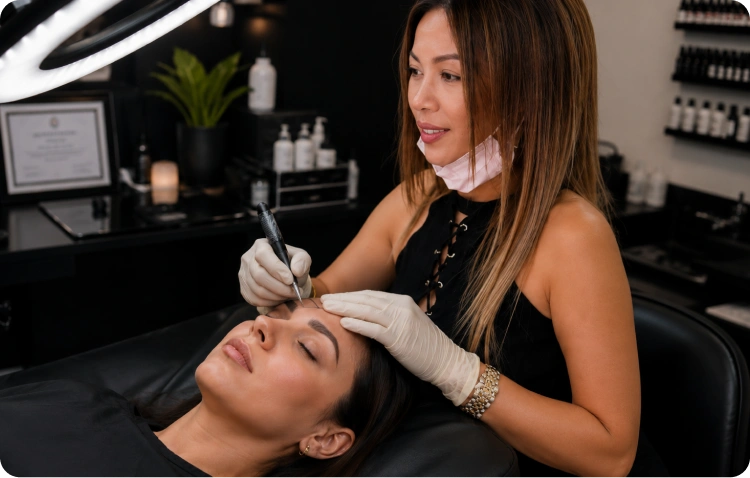
This is not the area to trust to just anyone. Working near the lash line and waterline demands precision, steady technique, and strict hygiene. As a Registered Body Art Practitioner working from a permitted, sterile studio, I take the eye area especially seriously — both for your safety and because there’s very little margin for error here.
What to expect
A correction usually starts with an honest assessment of what’s fixable directly versus what needs lightening first. Straightforward refinements may take one or two sessions; cases involving migration take longer because removal is gradual. As with all healing, the color looks stronger right after and settles over four to six weeks.
Send a photo and I'll tell you honestly
Eyeliner is delicate, so a real look is the only way to give you a real answer. Send a clear, close-up photo of your eyes and I’ll tell you whether it’s a straightforward refinement or a step-by-step correction.
Valencia, serving the Santa Clarita Valley. English & Vietnamese welcome.

Eyeliner Correction Questions Answered
Can migrated or smudged permanent eyeliner be fixed?
Migration — where pigment has spread into the skin and left a shadow — usually can’t be covered with more liner. Instead, it’s typically lightened with gentle saline removal first, then redefined into a clean line. Whether yours is correctable depends on how far it spread and how saturated it is, which a close-up photo can show.
Why did my permanent eyeliner turn blue or gray?
Like brows, eyeliner can heal or fade to a cool blue-gray tone as the warmer pigment tones break down faster. It can often be corrected by toning and redefining, though heavily migrated liner may need lightening first. An assessment tells you which applies.
My eyeliner is too thick — can it be made thinner?
Sometimes. If the extra thickness is from pigment that can be lightened, saline removal can reduce it before redefining a finer line. If it’s simply a heavy but well-placed line, options are more limited — which is why an honest assessment first matters. I’ll tell you what’s realistic.
Is eyeliner correction safe?
In trained, registered hands and a permitted, sterile studio, yes. The eye area is delicate and demands precision and strict hygiene, which is exactly why it shouldn’t be trusted to an uncertified provider. I’m a Registered Body Art Practitioner and follow single-use, sterile procedures for every client.