Lip Color Neutralization
Lip Neutralization — Correcting Dark or Uneven Lip Tone Before Lip Blush
If your lips are naturally dark, have a bluish or purplish cast, or healed unevenly from a previous lip tattoo, standard lip blush alone often won’t give you the soft, even colour you’re picturing. Lip neutralization is the step that fixes that it corrects the underlying tone first, so colour can sit true afterward. If you’ve searched for lip neutralization near me or how to correct dark lips, this is what you’re looking for.
I’m Jeanny Evans, and at JNX Beauty Lounge in Valencia, serving the Santa Clarita Valley, I use dark lip neutralization for two groups: people with naturally deeper or cool-toned lips who want an even base, and those correcting a previous lip blush that healed dark or patchy.

Registered Body Art Practitioner
LA County Dept. of Public Health
10+ Years of Experience
Thousands of Natural-Looking Results
Bloodborne Pathogens Certified
Cal/OSHA Safe Body Art Standards
Bilingual Care
English & Vietnamese · Permitted, Sterile Studio

Why some lips need neutralizing first
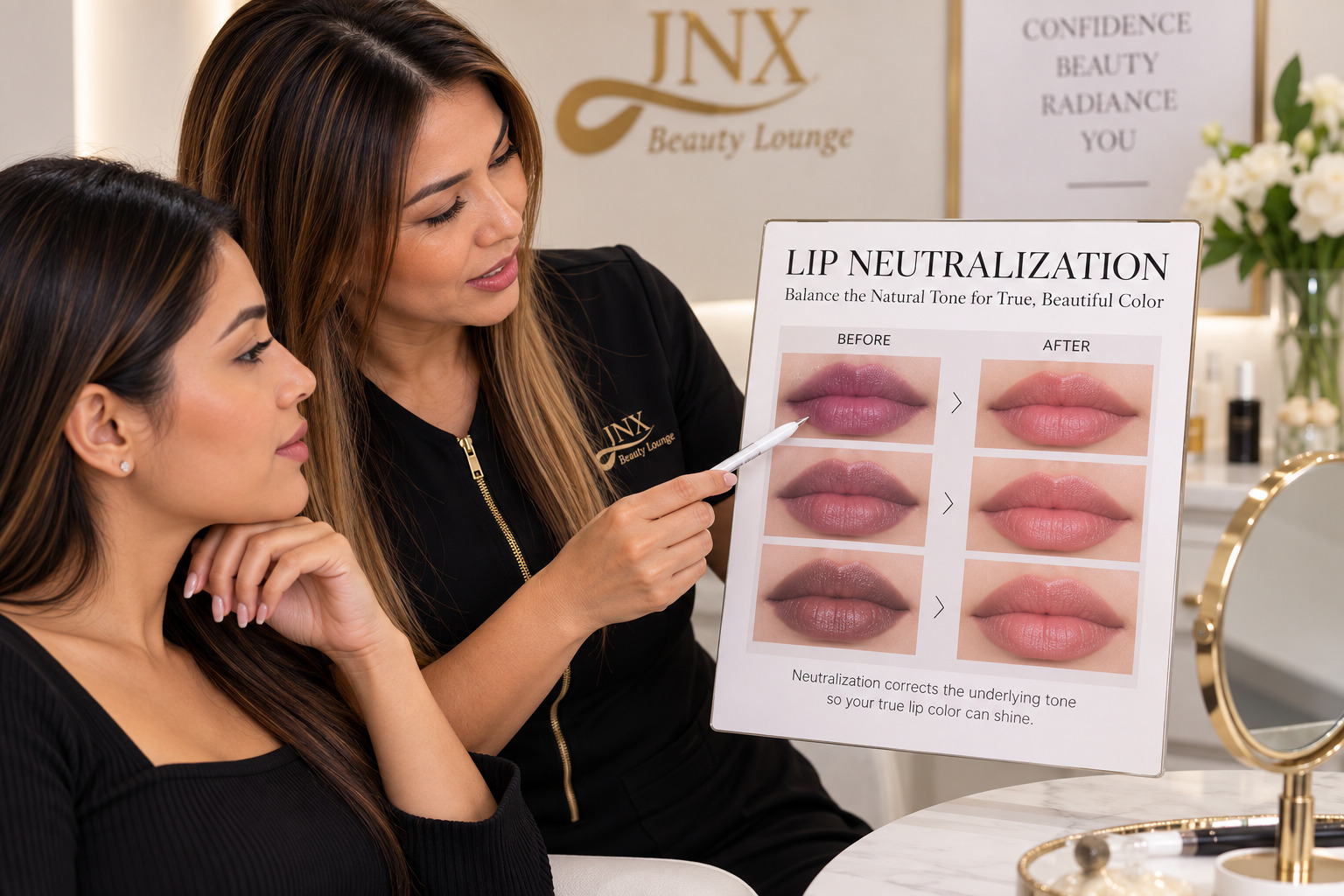
Lip color isn’t a blank canvas. Everyone’s lips have an underlying tone, and for many people especially those with more melanin or naturally cool-toned lips that base leans dark, blue, or purple. If you tattoo a soft pink or coral straight over a cool, dark base, the base shows through and dulls or muddies the result.
Neutralization corrects that base using warm tones that counter the cool darkness the same color-theory logic behind brow correction, applied to lips. Once the underlying tone is balanced, the lip color you actually want can be built on top and read true.
Who lip neutralization is for
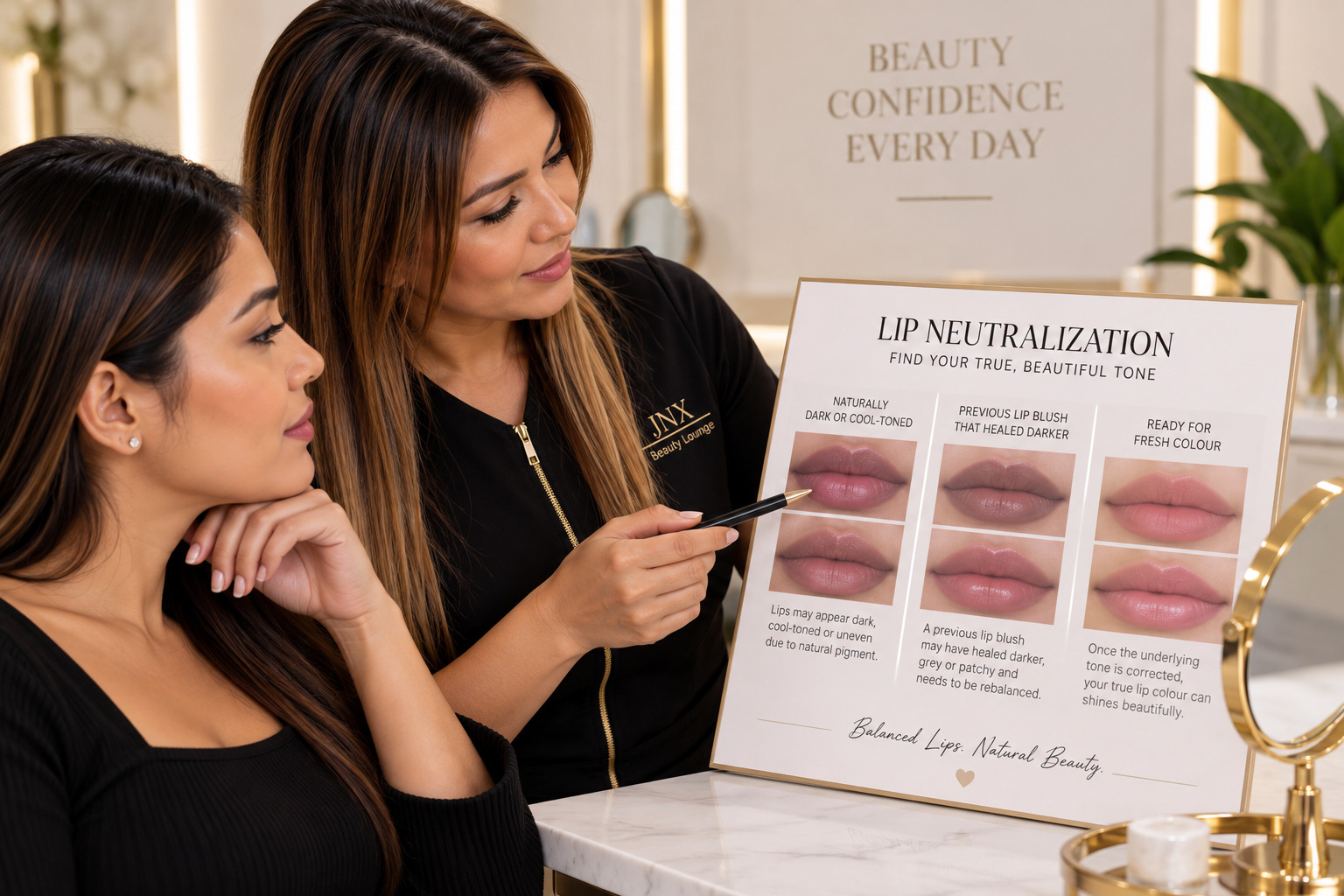
You may be a candidate if… • Your natural lips are noticeably dark, cool-toned, or uneven in colour and regular lipstick never quite looks right because your natural tone fights the colour. • A previous lip blush healed darker, greyer or patchier than you hoped and you want it rebalanced before adding fresh colour. If your lips are already an even, neutral tone, you may not need this step you can go straight to lip blush. An honest assessment tells you which. |

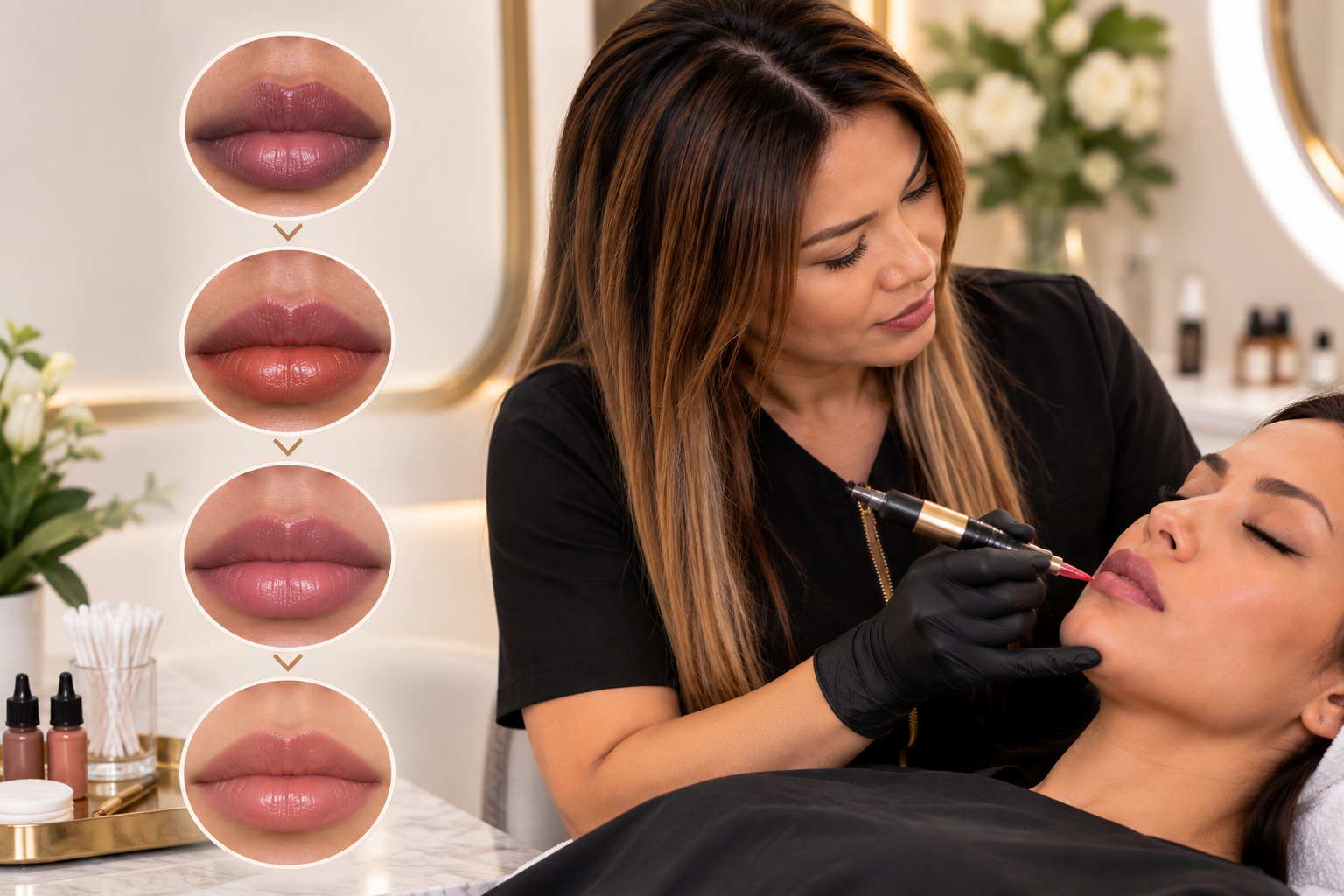
How the process works — patience pays off
Neutralization is usually a staged process, not a single appointment. The first session focuses on correcting the underlying tone using warm corrective pigments that counter the cool darkness the same colour-theory logic behind brow correction, applied to lips.
Then the lips heal fully, and this is the part that takes patience, because the true corrected tone only shows after healing. Once the base is right, a following session builds the actual colour you want. Doing it in stages is what protects your final result.
Wondering if your lips need neutralizing? Send a photo.
Lip tone is very individual, so a photo in natural light is the best way to know. Send one and I’ll tell you honestly whether you’d benefit from neutralization first or can go straight to lip blush.
In Valencia, serving the Santa Clarita Valley. English & Vietnamese welcome.

Lips Color Questions Answered
What is lip neutralization?
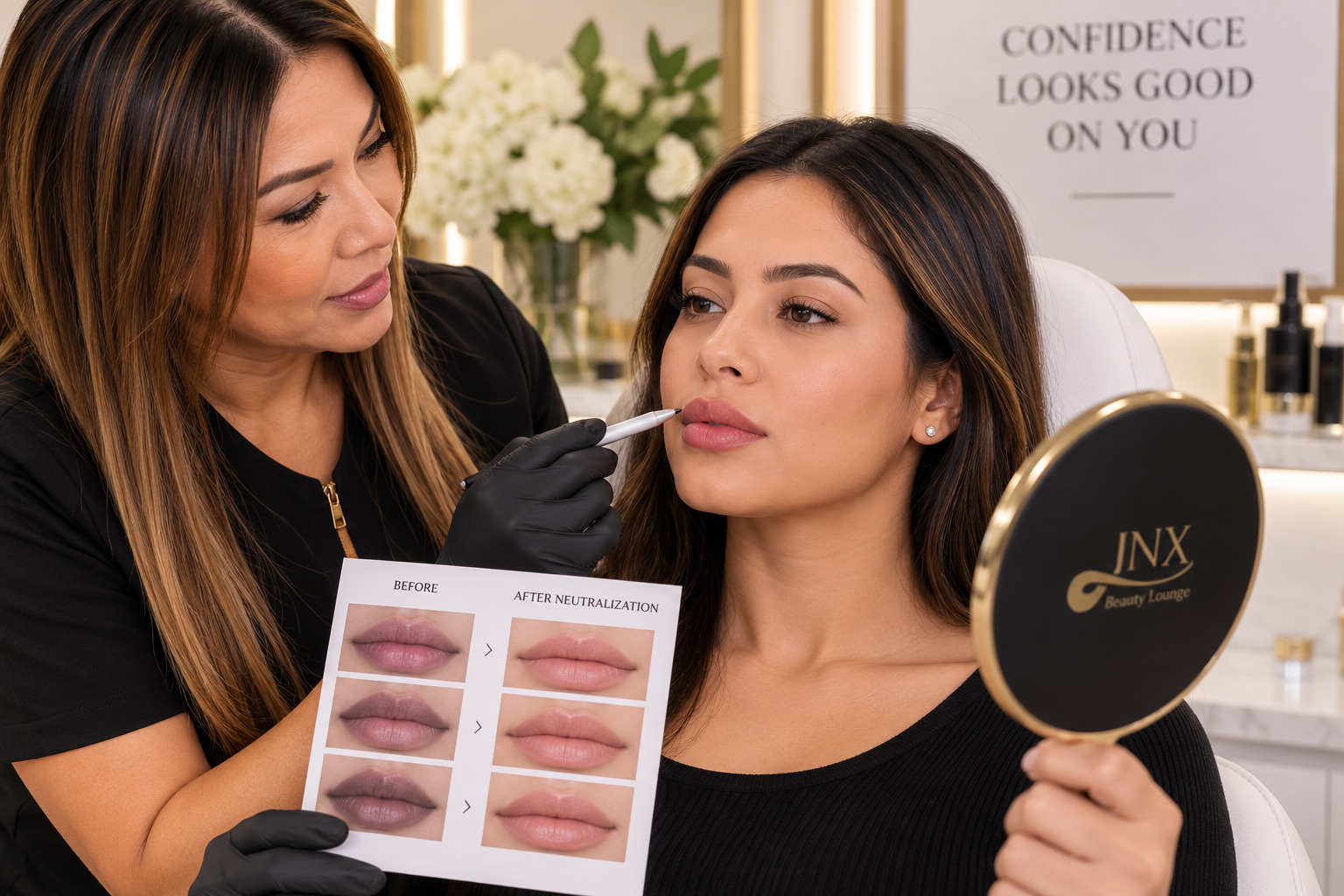
Lip neutralization is a corrective technique that balances a dark, cool or uneven natural lip tone using warm corrective pigments, so that lip blush colour can heal true afterward. It’s essentially colour correction for the lips fixing the base before adding the colour you actually want.
Do I need neutralization before lip blush?
Only if your natural lips are noticeably dark, cool-toned or uneven, or a previous lip tattoo healed dark. If your lips are already an even, neutral tone, you can usually go straight to lip blush a quick photo or consultation tells you which.
How many sessions does lip neutralization take?
It’s typically staged: a first session to correct the underlying tone, full healing in between, then a following session to build colour. How many depends on how dark or cool the starting tone is lips are one of the trickier areas to heal predictably, so doing it in stages protects the result.
Can you fix a lip blush that healed too dark?
Often, yes that’s one of the main reasons people come in. The dark or ashy tone is neutralized with warm correctors, then rebalanced toward a healthier, more natural colour once healed.